<?xml version="1.0" encoding="utf-8"?>
<feed xmlns="http://www.w3.org/2005/Atom">
   <title>Down Chicago’s Drain</title>
   <link rel="alternate" type="text/html" href="http://www.wurlington-bros.com/trashboat/" />
   <link rel="self" type="application/atom+xml" href="http://www.wurlington-bros.com/trashboat/atom.xml" />
   <id>tag:www.wurlington-bros.com,2008:/trashboat//3</id>
   <updated>2008-06-20T23:27:41Z</updated>
   <subtitle>An exploration down-stream via the Chicago &amp; Illinois Rivers</subtitle>
   <generator uri="http://www.sixapart.com/movabletype/">Movable Type 3.35</generator>

<entry>
   <title>Another reason not to swim in the river</title>
   <link rel="alternate" type="text/html" href="http://www.wurlington-bros.com/trashboat/2008/06/another_reason_not_to_swim_in.html" />
   <id>tag:www.wurlington-bros.com,2008:/trashboat//3.69</id>
   
   <published>2008-06-20T23:16:45Z</published>
   <updated>2008-06-20T23:27:41Z</updated>
   
   <summary> Today a live American Alligator was found in the Chicago River at Bubbly Creek! Apparently it was living happily there, with lots of fish to eat. Who knows how it got there, or how long it had been there?...</summary>
   <author>
      <name></name>
      
   </author>
   
   <category term="23" label="Chicago River" scheme="http://www.sixapart.com/ns/types#tag" />
   <category term="21" label="fauna" scheme="http://www.sixapart.com/ns/types#tag" />
   
   <content type="html" xml:lang="en" xml:base="http://www.wurlington-bros.com/trashboat/">
      <![CDATA[<img src="http://www.chicagotribune.com/media/photo/2008-06/40218451.jpg" width=250>

Today a live American Alligator was <a href="http://www.chicagotribune.com/features/lifestyle/green/chi-alligator-webjun21,0,4794931.story">found in the Chicago River at Bubbly Creek!</a> Apparently it was living happily there, with lots of fish to eat. Who knows how it got there, or how long it had been there? Its doubtful this is another sign of global warming, though, since the nearest natural habitat for wild alligators is 700-some miles downstream in northern Louisiana.]]>
      
   </content>
</entry>
<entry>
   <title>A Thousand Straws</title>
   <link rel="alternate" type="text/html" href="http://www.wurlington-bros.com/trashboat/2008/05/a_thousand_straws.html" />
   <id>tag:www.wurlington-bros.com,2008:/trashboat//3.67</id>
   
   <published>2008-05-27T17:00:15Z</published>
   <updated>2008-05-27T17:18:26Z</updated>
   
   <summary>In today&apos;s Chicago Tribune: Wisconsin becomes the fifth state to sign the Great Lakes Compact, a further step toward setting up a legal agreement between all states and provinces bordering the Great Lakes to preserve their 20% of the world&apos;s...</summary>
   <author>
      <name></name>
      
   </author>
   
   <category term="25" label="waste stream" scheme="http://www.sixapart.com/ns/types#tag" />
   
   <content type="html" xml:lang="en" xml:base="http://www.wurlington-bros.com/trashboat/">
      <![CDATA[In today's Chicago Tribune: Wisconsin becomes the fifth state <a href="http://www.chicagotribune.com/news/chi-water-warsmay27,0,2555872.story">to sign the Great Lakes Compact</a>, a further step toward setting up a legal agreement between all states and provinces bordering the Great Lakes to preserve their 20% of the world's fresh water.

Most of the attention to the Great Lakes Compact focuses on possible future attempts by the sunbelt cities to siphon some of our abundant water, but as the article points out, in the near term, the implications of the compact involve cities that straddle the Great Lakes and Mississippi watersheds. Chicago has been grandfathered in the agreement and is allowed to siphon off Lake Michigan water and send it downstream into the Chicago & Illinois Rivers, but in other places the watershed boundaries must be strictly adhered to. Whether the Milwaukee suburbs of Waukesha and New Berlin are allowed to mix lake water and well water in their water systems will be the first test of the strength of the interstate agreement.]]>
      
   </content>
</entry>
<entry>
   <title>Movable Bridges of the South Branch</title>
   <link rel="alternate" type="text/html" href="http://www.wurlington-bros.com/trashboat/2008/05/movable_bridges_of_the_south_b.html" />
   <id>tag:www.wurlington-bros.com,2008:/trashboat//3.68</id>
   
   <published>2008-05-22T05:07:50Z</published>
   <updated>2008-06-10T06:12:25Z</updated>
   
   <summary>Last Sunday I went on one of the tours put on for the city Great Places &amp; Spaces architecture festival. As usual we arrived at 7am to join a block-long line of architecture fans waiting to sign up on the...</summary>
   <author>
      <name></name>
      
   </author>
   
   <category term="23" label="Chicago River" scheme="http://www.sixapart.com/ns/types#tag" />
   
   <content type="html" xml:lang="en" xml:base="http://www.wurlington-bros.com/trashboat/">
      <![CDATA[Last Sunday I went on one of the tours put on for the city <a href="http://egov.cityofchicago.org/city/webportal/portalEntityHomeAction.do?entityName=Great+Chicago+Places+%26+Spaces&entityNameEnumValue=170">Great Places & Spaces</a> architecture festival. As usual we arrived at 7am to join a block-long line of architecture fans waiting to sign up on the free tours. And as usual several of the most interesting tours filled up before we made our way up to the sign-up sheets.

But this tour sounded interesting, a trolley tour of movable bridges along the South Branch of the Chicago River, lead by structural engineer Joseph Abruzzo.

<a href="http://www.flickr.com/photos/marmotfotos/2509083506/" title="Dolly by marmotfotos, on Flickr"><img src="http://farm3.static.flickr.com/2360/2509083506_dc95e97a23_m.jpg" width="240" height="164" alt="Dolly" /></a>

Chicago's flat terrain and multitude of railroads and streets intersecting with the small river have created an ideal place for experimentation in movable bridge technology. The city has more movable bridges than anywhere else in the world, of many types. Our 3-hour tour included stops at five bridges to show a wide variety.

Our first stop was on the grounds of a recycling yard where we could get a look at the Chicago Northwestern railroad swinging bridge, built in 1897 at the time of the construction of the Sanitary Canal. There are several of these turning bridges along this reach of the canal, all completed as the canal was excavated beneath them.

<a href="http://www.flickr.com/photos/marmotfotos/2509084014/" title="Swing Bridge by marmotfotos, on Flickr"><img src="http://farm3.static.flickr.com/2119/2509084014_3d43bfdd6c_m.jpg" width="180" height="240" alt="Swing Bridge" /></a>

Next our guide took us to look beyond some brush at the corner of the recycling yard where we could glimpse a rare early type of lift bridge, the Rall Bascule Bridge over a freight slip off the river. Patented by Theodore Rall, this bridge features a large counterweight hidden between the tracks behind the pivot axle, and a linkage which pulls the bridge backwards as it lifts, thereby providing more clearance for boats. The overgrown weeds and rusty tracks indicated that its no longer used.

<a href="http://www.flickr.com/photos/marmotfotos/2509084400/" title="Rall Bascule Bridge by marmotfotos, on Flickr"><img src="http://farm3.static.flickr.com/2176/2509084400_330fa5895a_m.jpg" width="180" height="240" alt="Rall Bascule Bridge" /></a>

Next, we boarded the trolley again and headed upstream. We passed by the most spectacular bridges along the South Branch, the four matching Scherzer-type rolling bascules near Western Avenue, completed in 1910. But our next stop was to see the Paige Bascule bridge over Bubbly Creek. New construction along the creek will soon block off the limited view we had: the best place to see the bridge is from the Ashland Ave station on the Orange Line.

<a href="http://www.flickr.com/photos/marmotfotos/2509084804/" title="Paige Bascule by marmotfotos, on Flickr"><img src="http://farm3.static.flickr.com/2294/2509084804_8e31787750_m.jpg" width="240" height="180" alt="Paige Bascule" /></a>

Our guide demonstrated the complex movements of this bridge using a cardboard mockup. The counterweight of the bridge is suspended horizontally above the roadbed just behind the pivot point. As the bridge lifts, the counterweight tilts downward, guided along gears rolling along the distinctive wavy rack of teeth on the struts of the bridge.

<a href="http://www.flickr.com/photos/marmotfotos/2508255989/" title="Paige Bascule by marmotfotos, on Flickr"><img src="http://farm4.static.flickr.com/3211/2508255989_eb24c8ea74_m.jpg" width="186" height="240" alt="Paige Bascule" /></a>
]]>
      
   </content>
</entry>
<entry>
   <title>Wildflowers along the Des Plaines</title>
   <link rel="alternate" type="text/html" href="http://www.wurlington-bros.com/trashboat/2008/05/wildflowers_along_the_des_plai.html" />
   <id>tag:www.wurlington-bros.com,2008:/trashboat//3.66</id>
   
   <published>2008-05-21T03:01:17Z</published>
   <updated>2008-05-21T05:49:59Z</updated>
   
   <summary>Last week the suburban Pioneer Press ran a whole series of articles about the Des Plaines River. So I decided to take the Blue Line out to the nearest forest preserve to see the springtime wildflowers along the Des Plaines....</summary>
   <author>
      <name></name>
      
   </author>
   
   <category term="28" label="Des Plaines River" scheme="http://www.sixapart.com/ns/types#tag" />
   
   <content type="html" xml:lang="en" xml:base="http://www.wurlington-bros.com/trashboat/">
      <![CDATA[Last week the suburban Pioneer Press ran a whole <a href="http://www.pioneerlocal.com/pioneerpress/939941,pp-river-051508-s1.article">series of articles</a> about the Des Plaines River.

So I decided to take the Blue Line out to the nearest forest preserve to see the springtime wildflowers along the Des Plaines. 

As soon as I entered Chevalier Woods I was met by a raccoon sitting in the midst of a garbage can in broad daylight. When I stopped to watch it humped reluctantly away, but then a whole crowd of white tailed deer gathered round expectantly. They were scraggy and half-molted into summer coats, but definitely not underfed. As I watched, a woman stepped out of a car with a jar of crackers and enticed a few nervous does to take a bite.

<a href="http://www.flickr.com/photos/marmotfotos/2510656862/" title="P5201516 copy by marmotfotos, on Flickr"><img src="http://farm3.static.flickr.com/2345/2510656862_cd0d974fca_m.jpg" width="240" height="180" alt="P5201516 copy" /></a>

Hiking down a forest path I soon came to the sluggish little river. The Des Plaines has to be one of the least glamorous of all the rivers of America. Although its lower reaches had a dramatic part to play in history, its upper part is consigned to travel through suburban sprawl on the western edge of Chicago. From Salt Creek up to its source in southern Wisconsin it is a slow stream, with a drop of only six inches per mile. Its waters are murky with natural tannins and clay, but mostly tainted by runoff from parking lots and fertilized lawns, and fouled by stormwater overflows of sewage. 

<a href="http://www.flickr.com/photos/marmotfotos/2510656258/" title="Picturesque Des Plaines by marmotfotos, on Flickr"><img src="http://farm4.static.flickr.com/3104/2510656258_0e77b595c9_m.jpg" width="240" height="180" alt="Picturesque Des Plaines" /></a>

The original French name of the river, des Pleines, is thought to refer to its tendency to flood, like any river through flat country. But flooding has become more of its habit in the last decades as its basin is increasingly developed and paved over. The river once had wetlands to escape to when it rose, but many have been filled in, and the river constrained by levees, which only increase the speed and height of the water downstream. 

Adding to its indignity, many of the forests in the preserves on its banks are in a shameful state. Large areas are overrun by invasive species such as buckthorn and garlic mustard, creating dense thickets of weedy brush that are of limited interest to wildlife and visitors alike. 

<a href="http://www.flickr.com/photos/marmotfotos/2510657658/" title="Endless garlic mustard by marmotfotos, on Flickr"><img src="http://farm3.static.flickr.com/2324/2510657658_ac5e35cf88_m.jpg" width="240" height="180" alt="Endless garlic mustard" /></a>

Volunteer groups such as the <a href="http://www.northbranchrestoration.org/">North Branch Restoration Project</a> have had some success in reestablishing native plants in some areas, but in other areas the invaders have taken over. Many of northern Illinois' native ecosystems were dependent on fire, both on the prairies and in the riparian woodlands, and years of fire suppression have only allowed the non-native plants to get the upper hand.

<a href="http://www.flickr.com/photos/marmotfotos/2509822359/" title="Brush by marmotfotos, on Flickr"><img src="http://farm3.static.flickr.com/2193/2509822359_edb670e7ba_m.jpg" width="180" height="240" alt="Brush" /></a>

In wandering for several hours in the woods, I saw a countless tiny white flowers of the garlic mustard, but only a few other wildflowers. Some wood violets, a few stands of mayapple, and later on a single trillium and trout lily (neither blooming right now). There were wild onions which gave Chicago its name, but not many other discoveries. In comparison with the lush flowers and growth of other Illinois forests, this was a desert.

<a href="http://www.flickr.com/photos/marmotfotos/2510655332/" title="Checagou by marmotfotos, on Flickr"><img src="http://farm3.static.flickr.com/2127/2510655332_688684d174_m.jpg" width="240" height="180" alt="Checagou" /></a> 

At least there were lots of animals and critters to see. Down by the river baby ducklings and goslings were peeping about. One short space of the trail was bouncing with baby grasshoppers hardly 1/4 inch long. And when I finally left, there was another of these attractive raccoons munching on croutons from some lost lunch dumped in the grass by the parking lot. It wasn't interested in the salad, but seemed to enjoy picking up the bread with its paws clumsily to take a bite.

<a href="http://www.flickr.com/photos/marmotfotos/2509820905/" title="Scavenging in broad daylight by marmotfotos, on Flickr"><img src="http://farm4.static.flickr.com/3146/2509820905_6765d8de2a_m.jpg" width="240" height="180" alt="Scavenging in broad daylight" /></a>
]]>
      
   </content>
</entry>
<entry>
   <title>Streets &amp; San in the News</title>
   <link rel="alternate" type="text/html" href="http://www.wurlington-bros.com/trashboat/2008/05/streets_san_in_the_news.html" />
   <id>tag:www.wurlington-bros.com,2008:/trashboat//3.65</id>
   
   <published>2008-05-19T02:17:07Z</published>
   <updated>2008-05-19T03:34:47Z</updated>
   
   <summary> In the Sun Times: Yesterday the Chicago Streets and Sanitation Department unveiled a new boat to be used on the Chicago River. The Scavenger 2000 is a 38-foot, one-person craft which features a bow which opens to become a...</summary>
   <author>
      <name></name>
      
   </author>
   
   <category term="23" label="Chicago River" scheme="http://www.sixapart.com/ns/types#tag" />
   <category term="25" label="waste stream" scheme="http://www.sixapart.com/ns/types#tag" />
   
   <content type="html" xml:lang="en" xml:base="http://www.wurlington-bros.com/trashboat/">
      <![CDATA[<img src="http://www.wurlington-bros.com/trashboat/Scav2000.jpg">

In the <a href="http://www.suntimes.com/news/metro/956881,CST-NWS-boat18.article">Sun Times:</a> Yesterday the Chicago Streets and Sanitation Department unveiled a new boat to be used on the Chicago River. The <a href="http://www.scavenger2000.com/main.html">Scavenger 2000</a> is a 38-foot, one-person craft which features a bow which opens to become a floating vacuum cleaner, sucking in 10,000 to 20,000 gallons of water per minute. Trash is skimmed off and collected in a basket, while the water continues through a "decontamination chamber" which injects ozone to kill bacteria and viruses, as well as breaking down odor-causing chemicals and pollutants. The hyper-oxygenated water is then ejected from the rear of the vessel. 

While it will no doubt help improve the water quality in the river to some degree, what is really needed is a similar decontamination system where the bacteria enters the river: at the sewage treatment plants where wastewater is not fully disinfected. Chicago is one of the few major cities which does not disinfect its graywater before releasing it downstream. Paradoxically, the Water Reclamation District does not decontaminate its wastewater because the Chicago River is not considered clean enough to warrant it.

Without changes at the source, the river will still be too dangerous for human contact, no matter how many toy boats the city launches. Besides, the river is not some bathtub of dirty water to be scrubbed clean, it is a damaged but living and improving ecosystem. How many fish and beneficial organisms will be sucked through the disinfection chamber and killed along with the harmful ones? Instead of toy vacuum cleaners, a more advanced solution to cleansing the water would be a program to plant vegetation and wetlands along the banks of the river, to let the water sift and clean itself with sunlight and natural algae.

In other news, a short summary of the Streets and San Department appeared recently in <a href="http://wasteage.com/Collections_And_Transfer/waste_windy_city/">WasteAge magazine</a>.]]>
      
   </content>
</entry>
<entry>
   <title>Up The Yangtze - The Film</title>
   <link rel="alternate" type="text/html" href="http://www.wurlington-bros.com/trashboat/2008/05/up_the_yangtze_the_film.html" />
   <id>tag:www.wurlington-bros.com,2008:/trashboat//3.64</id>
   
   <published>2008-05-16T17:40:42Z</published>
   <updated>2008-05-16T18:22:52Z</updated>
   
   <summary> A few days ago I finally had the chance to see the film &quot;Up the Yangtze&quot; at the IFC film center. There were hardly a half dozen in the audience, which was a shame because the documentary was wonderful,...</summary>
   <author>
      <name></name>
      
   </author>
   
   <category term="32" label="China" scheme="http://www.sixapart.com/ns/types#tag" />
   <category term="40" label="Yangtze River" scheme="http://www.sixapart.com/ns/types#tag" />
   
   <content type="html" xml:lang="en" xml:base="http://www.wurlington-bros.com/trashboat/">
      <![CDATA[<embed src='http://www.onf.ca/includes/flash_player/mediaplayer.swf' width='512' height='312' allowfullscreen='true' allowscriptaccess='always' flashvars='&file=rtmp://flash.onf.ca/onf/Webfilms/up-the-yangtze&id=up_the_yangtze_en_hv&height=314&image=http://www.onf.ca/medias/nfb_tube/thumbs_large/2008/uptheyangtze_trailer_big.jpg&width=512' />

A few days ago I finally had the chance to see the film "Up the Yangtze" at the IFC film center. There were hardly a half dozen in the audience, which was a shame because the documentary was wonderful, a dramatic parable of change in modern China. 

The film follows a young boy and girl who look for work on a luxury tour boat for Western tourists coasting the Three Gorges of the Yangtze River. For both, the boat represents an escape from the drudgery of everyday life on shore, an opportunity or springboard to a better life. But unlike Huck Finn's escape from stifling sivilization, here the opportunity is to learn English, to meet foreigners and learn from them, a lucky break at earning a modern living in the service industry and entry into the middle class.

The epic backdrop of their story is the closing of the Three Gorges Dam, which tamed the mighty Yangzte, and will bring electricity and modern living standards to much of the region. It is expected to provide fully 10% of China's electricity needs when fully filled. The tough cost is that the reservoir backed up behind the dam has forced the relocation of nearly 2 million residents, inundated countless archaeological sites of China's earliest peoples, and flooded the best flat agricultural land in a mountainous region. 

But in following this opportunity toward prosperity, those who live along the Yangtze cannot look back at the poverty of peasant farming and the old backbreaking work of pulling boats upstream against the rapids in the gorge. And if they want a chance to tour on those luxury boats someday as well as work on them, the river must change as well in order to align with the modern global service economy.

<a href="http://uptheyangtze.com/index.php">Up the Yangtze</A> is playing in New York and cities in Canada, and is scheduled to be shown on POV on PBS in October.

]]>
      
   </content>
</entry>
<entry>
   <title>Scrappers by the River</title>
   <link rel="alternate" type="text/html" href="http://www.wurlington-bros.com/trashboat/2008/05/scrappers_by_the_river.html" />
   <id>tag:www.wurlington-bros.com,2008:/trashboat//3.60</id>
   
   <published>2008-05-03T15:15:18Z</published>
   <updated>2008-05-03T15:17:38Z</updated>
   
   <summary> My photographs of Chicago scrapper trucks will be on view in the temporary Riverwalk Gallery next to the river at Wabash &amp; Wacker from May 2-4. The gallery will be open Sat 11-10 and Sun 11-6....</summary>
   <author>
      <name></name>
      
   </author>
   
   <category term="25" label="waste stream" scheme="http://www.sixapart.com/ns/types#tag" />
   
   <content type="html" xml:lang="en" xml:base="http://www.wurlington-bros.com/trashboat/">
      <![CDATA[<a href="http://www.flickr.com/photos/marmotfotos/2461034109/" title="031106Border by marmotfotos, on Flickr"><img src="http://farm4.static.flickr.com/3289/2461034109_1c87489235_o.jpg" width="360" height="216" alt="031106Border" /></a>

My photographs of Chicago scrapper trucks will be on view in the temporary Riverwalk Gallery next to the river at Wabash & Wacker from May 2-4. The gallery will be open Sat 11-10 and Sun 11-6.]]>
      
   </content>
</entry>
<entry>
   <title>Blue Bags Dumped</title>
   <link rel="alternate" type="text/html" href="http://www.wurlington-bros.com/trashboat/2008/05/blue_bags_dumped.html" />
   <id>tag:www.wurlington-bros.com,2008:/trashboat//3.59</id>
   
   <published>2008-05-03T15:04:44Z</published>
   <updated>2008-05-19T03:22:42Z</updated>
   
   <summary>At last, Chicago is giving up on its failed Blue Bag recycling program. Since 1995 the city has placed recyclables in blue garbage bags, which are collected with regular household garbage and only separated at garbage transfer stations. After being...</summary>
   <author>
      <name></name>
      
   </author>
   
   <category term="25" label="waste stream" scheme="http://www.sixapart.com/ns/types#tag" />
   
   <content type="html" xml:lang="en" xml:base="http://www.wurlington-bros.com/trashboat/">
      <![CDATA[At last, Chicago is giving up on its failed Blue Bag recycling program. Since 1995 the city has placed recyclables in blue garbage bags, which are collected with regular household garbage and only separated at garbage transfer stations. 

After being compacted and mixed with waste there was often little usable material to recycle, but perhaps worse was that citizens had little faith that the materials were actually recycled, so that few participated in the program.

For the last year, several wards have been using separate blue bins to collect recyclables, a system which will eventually be rolled out across the entire city in the next year or so when the budget allows. Until then Chicago will have no recycling program at all for most of its waste.

<a href="http://www.chicagotribune.com/features/lifestyle/green/chi-blue-bag-ends-web-may03,0,3399015.story">Chicago Tribune</a> story.]]>
      
   </content>
</entry>
<entry>
   <title>The Globalized Scrap Industry</title>
   <link rel="alternate" type="text/html" href="http://www.wurlington-bros.com/trashboat/2008/04/scrap_online.html" />
   <id>tag:www.wurlington-bros.com,2008:/trashboat//3.58</id>
   
   <published>2008-04-28T16:19:11Z</published>
   <updated>2008-04-28T16:44:59Z</updated>
   
   <summary>If you haven&apos;t read it yet, the January New Yorker article about the worldwide scrap metal industry by John Seabrook is now online at booknoise.net. Its a fascinating look into the booming scrap metal market and its global connections from...</summary>
   <author>
      <name></name>
      
   </author>
   
   <category term="32" label="China" scheme="http://www.sixapart.com/ns/types#tag" />
   <category term="25" label="waste stream" scheme="http://www.sixapart.com/ns/types#tag" />
   
   <content type="html" xml:lang="en" xml:base="http://www.wurlington-bros.com/trashboat/">
      <![CDATA[If you haven't read it yet, the January New Yorker article about the worldwide scrap metal industry by John Seabrook is <a herf="http://www.booknoise.net/johnseabrook/stories/culture/scrap/index.html">now online at booknoise.net</a>. Its a fascinating look into the booming scrap metal market and its global connections from New York to LA to China.

As mentioned in the article, Metal Management based in Chicago and <a href="http://www.sims-group.com">Sims Group</a> based in Australia recently merged to form the world's largest scrap metal recycling dealer. What had years ago been a highly localized industry has been transformed into a fully globalized commodity. 

As also mentioned in the article, a key part of that globalization that has yet to be realized is the use of containers to standardize the transport of scrap metal. One LA scrap dealer, Nathan Frankel, has come up with <a href="http://money.cnn.com/magazines/fortune/fortune_archive/2006/05/15/8376896/index.htm">a method to allow use of standard shipping containers</a>. Two thirds of the shipping containers bringing products from China to the U.S. return empty, so this innovation could change things dramatically. Scrap metal is currently the second highest export from the U.S. to China due to the construction boom there.]]>
      
   </content>
</entry>
<entry>
   <title>Riverwalk</title>
   <link rel="alternate" type="text/html" href="http://www.wurlington-bros.com/trashboat/2008/04/riverwalk.html" />
   <id>tag:www.wurlington-bros.com,2008:/trashboat//3.57</id>
   
   <published>2008-04-28T14:13:35Z</published>
   <updated>2008-04-28T16:46:07Z</updated>
   
   <summary>The City of Chicago will soon start construction adding to the riverwalk along the main stem of the Chicago River. Aside from short disconnected segments of sidewalk along the river, the riverwalk is a walking and biking trail connected to...</summary>
   <author>
      <name></name>
      
   </author>
   
   <category term="23" label="Chicago River" scheme="http://www.sixapart.com/ns/types#tag" />
   
   <content type="html" xml:lang="en" xml:base="http://www.wurlington-bros.com/trashboat/">
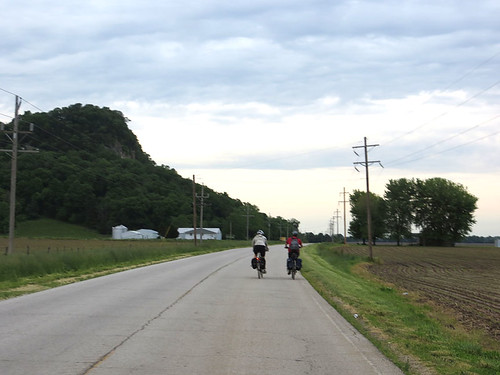
      <![CDATA[The City of Chicago will soon start construction adding to the riverwalk along the main stem of the Chicago River. 

Aside from short disconnected segments of sidewalk along the river, the riverwalk is a walking and biking trail connected to the lakefront path which ends abruptly at the Michigan Avenue Bridge. By the end of 2008 the city will construct under-bridge walkways around the bridge bases at Michigan and Wabash Avenues, bringing a continuous path farther west into the loop.

The riverwalk east of Michigan is a pretty path lined with small trees but often seems a bit forlorn and underutilized, a scrap of parkland screened off by iron walls from the netherworld of Lower Wacker Drive. The streets above don't have a lot of foot traffic, just cars and trucks racing past on multiple level roadways. So connecting the riverwalk to more pedestrian-friendly areas west of Michigan should bring more users down toward the lake, as well as allow cycling commuters easier access into downtown.  
<a href="http://www.chicagotribune.com/travel/chi-gettingaround-28-apr28,1,3970258.column">Chicago Tribune story</a>]]>
      
   </content>
</entry>
<entry>
   <title>Up the Yangtze</title>
   <link rel="alternate" type="text/html" href="http://www.wurlington-bros.com/trashboat/2008/04/up_the_yangtze.html" />
   <id>tag:www.wurlington-bros.com,2008:/trashboat//3.56</id>
   
   <published>2008-04-27T23:50:58Z</published>
   <updated>2008-04-27T23:55:19Z</updated>
   
   <summary>I&apos;ve just seen the trailer for a new film about the Three Gorges Dam on the Yangtze River. If you are in New York or Toronto you may be able to see a screening of it, otherwise you&apos;ll have to...</summary>
   <author>
      <name></name>
      
   </author>
   
   <category term="32" label="China" scheme="http://www.sixapart.com/ns/types#tag" />
   <category term="40" label="Yangtze River" scheme="http://www.sixapart.com/ns/types#tag" />
   
   <content type="html" xml:lang="en" xml:base="http://www.wurlington-bros.com/trashboat/">
      <![CDATA[I've just seen the trailer for a new film about the Three Gorges Dam on the Yangtze River.

<object width="425" height="355"><param name="movie" value="http://www.youtube.com/v/Q1fFuynf-Yw&hl=en"></param><param name="wmode" value="transparent"></param><embed src="http://www.youtube.com/v/Q1fFuynf-Yw&hl=en" type="application/x-shockwave-flash" wmode="transparent" width="425" height="355"></embed></object>

If you are in New York or Toronto you may be able to see a screening of it, otherwise you'll have to wait until October 14 to see it on <a hfef="http://www.pbs.org/pov/pov2008/uptheyangtze/preview.html">PBS</a>.]]>
      
   </content>
</entry>
<entry>
   <title>The Birdfoot</title>
   <link rel="alternate" type="text/html" href="http://www.wurlington-bros.com/trashboat/2008/04/the_birdfoot.html" />
   <id>tag:www.wurlington-bros.com,2008:/trashboat//3.63</id>
   
   <published>2008-04-13T01:38:23Z</published>
   <updated>2008-05-16T17:40:20Z</updated>
   
   <summary> The Center for Land Use Interpretation in Los Angeles has a new exhibit and book entitled The Birdfoot which spotlights the geography of the Mississippi Delta where the river meets the sea. Near its mouth, the river splits into...</summary>
   <author>
      <name></name>
      
   </author>
   
   <category term="38" label="Mississippi River" scheme="http://www.sixapart.com/ns/types#tag" />
   
   <content type="html" xml:lang="en" xml:base="http://www.wurlington-bros.com/trashboat/">
      <![CDATA[<img src="http://www.clui.org/clui_4_1/ondisplay/birdfoot/birdfoot_map_17_lores.jpg" width="240">

The Center for Land Use Interpretation in Los Angeles has a new exhibit and book entitled <a href="http://www.clui.org/clui_4_1/pro_pro/exhibits/birdfoot.html">The Birdfoot</a> which spotlights the geography of the Mississippi Delta where the river meets the sea. Near its mouth, the river splits into several channels, so that when seen from the air the landscape resembles the leg and splayed toes of a bird.

When I was in New Orleans I'd thought about visiting this area, but a rental car agent told me there was little to see there. In a way he was right, because much of the area is inaccessible by road and not easily understood by the casual visitor. But fortunately the CLUI has researched and explored the Birdfoot by car, boat and air, and presents the story in a slide presentation tour.

The end of any river is a mysterious landscape of half-land, half-water. In its natural state the river and the sea and the new land are in flux, a triangular balance of silt and tide and flood creating temporary landscapes without solidity.  

Starting at Venice, where the road ends, the photo tour moves downriver with stops at various outposts of industry and marinas set in wide isolated swamps and marshy forests. Though these scattered signs of human activity are are nearly overgrown in the fecundity of tropical greenery, the Mississippi Birdfoot is no Eden. 
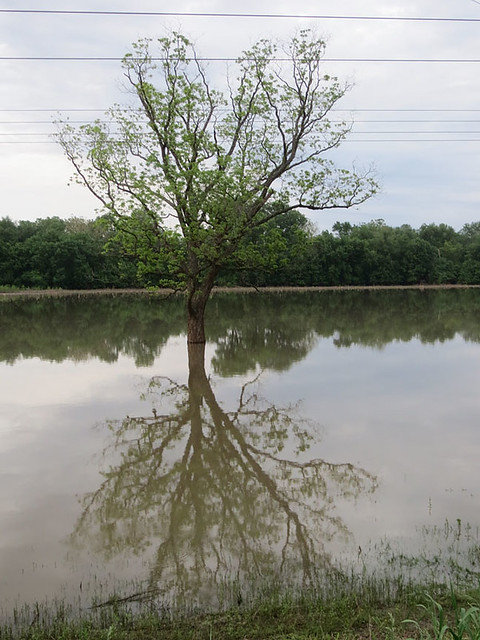
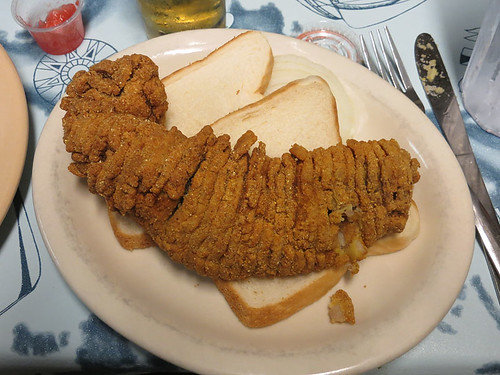
Instead it is scarred by countless channels cut through the marshes used by industry. It is probed by oil exploration wells and natural gas pipelines. The levee system first built in the 1870s opened the river to modern shipping traffic, but cut off the surrounding marshlands from the flood borne silt that replenished them. This sinking landscape is exposed to storms and hurricanes, eroding it further, leaving only the artificial high ground of the levees. The spindly toes of the Birdfoot only become more distinct with every storm.

One by one the tour passes the lonely settlements of Tidewater, Trappers Canal, and Pass a l'Outre, seasonal hunting camps, tank farms and oil depots. In the stilted dwellings of Pilottown, riverboat pilots await their turn to take ocean vessels up the Mississippi to New Orleans and Baton Rouge.

One by one the signs of humanity are left behind as the tour follows the Southwest Pass navigation corridor. The land falls away on all sides. Now the sky is taking on the deep ocean blue of the Gulf of Mexico just ahead, in anticipation of that mystical reunion of river and sea. Beyond one last industrial structure, a bunking place for riverboat pilots, and there are the jetties that guide the ships and direct the river current to keep the channel scoured clear of silt. Venturing on beyond the land, simple posts mark the passage until it gives way to the endless horizon of the open sea.

<a href="http://www.clui.org">The Center for Land Use Interpretation</a>
9331 Venice Blvd.
Culver City, California
]]>
      
   </content>
</entry>
<entry>
   <title>When the Geese Return to Goose Island</title>
   <link rel="alternate" type="text/html" href="http://www.wurlington-bros.com/trashboat/2008/04/when_the_geese_return_to_goose.html" />
   <id>tag:www.wurlington-bros.com,2008:/trashboat//3.62</id>
   
   <published>2008-04-10T01:25:29Z</published>
   <updated>2008-05-07T07:44:59Z</updated>
   
   <summary>Edwin Way Teale writes in his book North With the Spring, &quot;Spring advances up the United States at the average rate of about fifteen miles a day. It ascends mountainsides at the rate of about a hundred feet a day....</summary>
   <author>
      <name></name>
      
   </author>
   
   <category term="23" label="Chicago River" scheme="http://www.sixapart.com/ns/types#tag" />
   <category term="21" label="fauna" scheme="http://www.sixapart.com/ns/types#tag" />
   <category term="42" label="Goose Island" scheme="http://www.sixapart.com/ns/types#tag" />
   
   <content type="html" xml:lang="en" xml:base="http://www.wurlington-bros.com/trashboat/">
      <![CDATA[Edwin Way Teale writes in his book <I>North With the Spring</I>, "Spring advances up the United States at the average rate of about fifteen miles a day. It ascends mountainsides at the rate of about a hundred feet a day. It sweeps ahead like a flood of water, racing down the long valleys, creeping up hillsides in a rising tide." 

In flat Chicago, springtime washes in from the south in small tides of singing birds and early wildflowers, but soon rushes in a green flood of leafy trees and thick grass. At Goose Island, one of the first signs of spring is pairs of geese patrolling the turning basin and cropping the nearby lawns of industrial parks. 

<a href="http://www.flickr.com/photos/marmotfotos/2413969344/" title="Goldeneye &amp; Coot by marmotfotos, on Flickr"><img src="http://farm4.static.flickr.com/3291/2413969344_718fd47157_m.jpg" width="240" height="150" alt="Goldeneye &amp; Coot" /></a>

<a href="http://www.flickr.com/photos/marmotfotos/2413968328/" title="Leap by marmotfotos, on Flickr"><img src="http://farm3.static.flickr.com/2302/2413968328_d4d5fa8d64_m.jpg" width="240" height="180" alt="Leap" /></a>

<a href="http://www.flickr.com/photos/marmotfotos/2413144553/" title="Defending Territory by marmotfotos, on Flickr"><img src="http://farm4.static.flickr.com/3133/2413144553_3c7832dc84_m.jpg" width="240" height="180" alt="Defending Territory" /></a>

<a href="http://www.flickr.com/photos/marmotfotos/2413969142/" title="P4069671 copy by marmotfotos, on Flickr"><img src="http://farm4.static.flickr.com/3078/2413969142_cbe8a44919_m.jpg" width="240" height="180" alt="P4069671 copy" /></a>
]]>
      
   </content>
</entry>
<entry>
   <title>Twenty percent</title>
   <link rel="alternate" type="text/html" href="http://www.wurlington-bros.com/trashboat/2008/02/twenty_percent.html" />
   <id>tag:www.wurlington-bros.com,2008:/trashboat//3.55</id>
   
   <published>2008-02-28T05:37:55Z</published>
   <updated>2008-02-28T07:00:42Z</updated>
   
   <summary>The other day I went to a talk in Rogers Park, part of a new series put on by the 49th Ward Green Corps. Of the three speakers, I found most interesting the talk by Debra Shore, one of the...</summary>
   <author>
      <name></name>
      
   </author>
   
   <category term="23" label="Chicago River" scheme="http://www.sixapart.com/ns/types#tag" />
   <category term="25" label="waste stream" scheme="http://www.sixapart.com/ns/types#tag" />
   
   <content type="html" xml:lang="en" xml:base="http://www.wurlington-bros.com/trashboat/">
      <![CDATA[The other day I went to a talk in Rogers Park, part of a new series put on by the <a href="www.ward49.com/site/epage/46607_322.htm">49th Ward Green Corps</a>.  

Of the three speakers, I found most interesting the talk by Debra Shore, one of the commissioners of the <a href="http://www.mwrd.org/">Metropolitan Water Reclamation District</a>, which manages fresh and wastewater in the greater Chicago area.

<a href="http://www.flickr.com/photos/marmotfotos/2297008221/" title="Debra Shore by marmotfotos, on Flickr"><img src="http://farm4.static.flickr.com/3259/2297008221_97ae22440c_m.jpg" width="175" height="240" alt="Debra Shore" /></a>

In her talk, Shore said that since the reversal of the Chicago River in 1900, over 30 trillion gallons of Lake Michigan water have been diverted out of its watershed down the Illinois River. There are locks controlling the mouth of the river so most of the drainage does not come directly from the lake, but flows through the piping of the city. Living next to such a huge body of water, most Chicagoans take fresh water for granted. The Great Lakes hold 20% of the fresh water on earth, and 90% of the fresh water in the U.S. so much that it seems unlimited.

But global warming forecasts predict less rainfall in the midwest, and as the Great Lakes states lose population to booming Sun Belt cities, local governments are already planning ahead to a day when <a href="http://www.chicagoreader.com/greenchicago/water/">outsiders may attempt</a> to exploit our fresh water. Under an agreement by the Council of Great Lakes Governors, no state or province bordering the Lakes is allowed to take water outside of the watershed of the Lakes. But that is exactly what happens in Chicago. Over <a href="http://chicagowildernessmag.org/issues/winter2007/water.html">900 million gallons</a> of fresh water are pulled in each day from Lake Michigan, are used by citizens, then flow through treatment plants to end up the Chicago River and drain out of the natural watershed. Even rainwater which falls on the city runs into storm drains which connect to the sewage system, or stored in the Deep Tunnel and eventually pumped to the same treatment plants and sent away.

At this point there are no plans to reverse the flow of wastewater flowing south out of the city, but there are many things that can be done to reduce the amount of water that needs to be taken from the lake, and the Water Reclamation District is working on some of these, though without much funding. 

M8 million gallons a day are lost from illegal fire hydrant use. Perhaps 78 million gallons a day are lost through leaking pipes. In a city with hundreds of miles of aging, deteriorating water mains, pipe replacement barely keeps up.

Another plan to reduce the amount of water sent downstream is to keep storm and rain water out of the system by green engineering approaches. Bill Eyring of the <a href="http://www.cnt.org/">Center for Neighborhood Technology</a> spoke about rain gardens and bioswales, small garden depressions which can temporarily store runoff from rooftops and parking lots, allowing it to soak into the ground naturally and return to Lake Michigan or the local water table instead of running into the sewage system.

<a href="http://www.flickr.com/photos/marmotfotos/2297008303/" title="Bill Eyring by marmotfotos, on Flickr"><img src="http://farm4.static.flickr.com/3172/2297008303_66624bf32b_m.jpg" width="187" height="240" alt="Bill Eyring" /></a>

Any storm water that can be drained away naturally instead of through the overloaded sewage system also avoids another nasty combined sewage outflow incident like the one <a href="http://www.wurlington-bros.com/trashboat/2007/08/combined_sewer_outflow_day_2.html">we saw up close</a> last summer, when raw sewage floods backwards into the river. And any rain water that that returns to Lake Michigan will help keep the lake as the amazing place it should be.]]>
      
   </content>
</entry>
<entry>
   <title>River Vagrants</title>
   <link rel="alternate" type="text/html" href="http://www.wurlington-bros.com/trashboat/2008/02/river_vagrants.html" />
   <id>tag:www.wurlington-bros.com,2008:/trashboat//3.54</id>
   
   <published>2008-02-26T04:49:31Z</published>
   <updated>2008-02-26T04:56:07Z</updated>
   
   <summary>Today Charles alerted me to an article in the March Harper&apos;s about a guy named Matt who is sailing a homemade boat down the Mississippi. What a silly idea! Who would have thought of that?? You have to be a...</summary>
   <author>
      <name></name>
      
   </author>
   
   <category term="38" label="Mississippi River" scheme="http://www.sixapart.com/ns/types#tag" />
   <category term="15" label="river journeys" scheme="http://www.sixapart.com/ns/types#tag" />
   
   <content type="html" xml:lang="en" xml:base="http://www.wurlington-bros.com/trashboat/">
      <![CDATA[Today Charles alerted me to an article in the March Harper's about a guy named Matt who is sailing a homemade boat down the Mississippi. What a silly idea! Who would have thought of that??
You have to be a subscriber to <a href="http://www.harpers.org/archive/2008/03/0081945">read the article</a> online.  I'll have to go get a copy and find out how the tale turns out. Does he make it to New Orleans?]]>
      
   </content>
</entry>

</feed>