Paper in Motion
A time-lapse film by the New York Department of Sanitation showing waste paper being gathered and turned into cardboard boxes.
A time-lapse film by the New York Department of Sanitation showing waste paper being gathered and turned into cardboard boxes.
A short film by Sasaki Associates describes the progress of the new Riverwalk path along the Chicago River
Chicago Riverwalk Under Construction from Sasaki Associates on Vimeo.
Chicago is famous for its unusual way of celebrating St. Patrick's day by dumping green dye in the Chicago River. A few years ago I made it downtown early to watch how it happens.
Here's a timelapse movie of the 2014 transformation of the river from drab algae green to electric artificial green:

WBEZ does an analysis of century-old data about garbage collection in the city of Chicago.
The article has interesting graphs comparing the amount of consumer waste produced in 1905 to the present day. But its also a interesting glimpse into the old-fashioned methods of trash removal.
Last week's Memorial Day bike trip along the Mississippi from St. Louis to Quincy inspired me to pick up Chad Pregracke's book From the Bottom Up: One Man's Crusade to Clean America's Rivers
The author was in Chicago several years ago to promote the book, published by National Geographic, and talk about his lifelong project to clean trash from the great rivers of the Midwest.
The book tells the long adventure of how Pregracke formed the organization Living Lands and Waters to collect refuse, plant trees and educate the public about rivers. From his early experiences growing up swimming and boating on the Mississippi, the teenage Pregracke is inspired to spend a day cleaning up unsightly debris on the shoreline. Local businesses and neighbors take an interest and lend support to his DIY efforts, setting him off on a quest to build an organization and a fleet of garbage collection barges roaming rivers near and far to gather industrial flotsam and jetsam marring the shoreline.
Pegracke's enthusiasm for his mission comes across well in the book. The ups and downs of working on the muddy river and navigating fundraising meetings are buoyed by his single-minded desire to improve the great river. Perhaps the prose of the tale rarely strays from the main channel to explore tiny tributary tales, or steps back to examine the bigger picture, but instead the story drives steadily on as the organization faces challenges and successes each year. Indeed in the last chapters the team of river cleaners often find it difficult to find the garbage along river banks they've cleaned repeatedly in previous years. Will they soon find themselves out of a job? Forays into rivers of the urban East Coast uncover vast new bodies of waterlogged refuse for the energetic volunteers, waiting just around the bend!
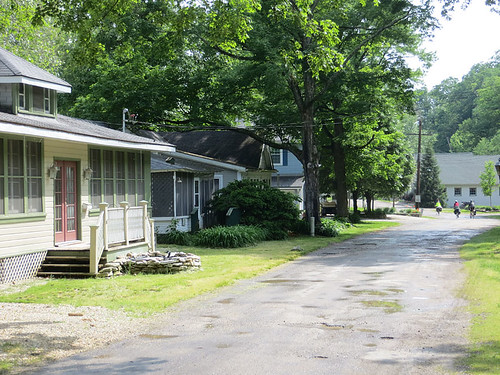
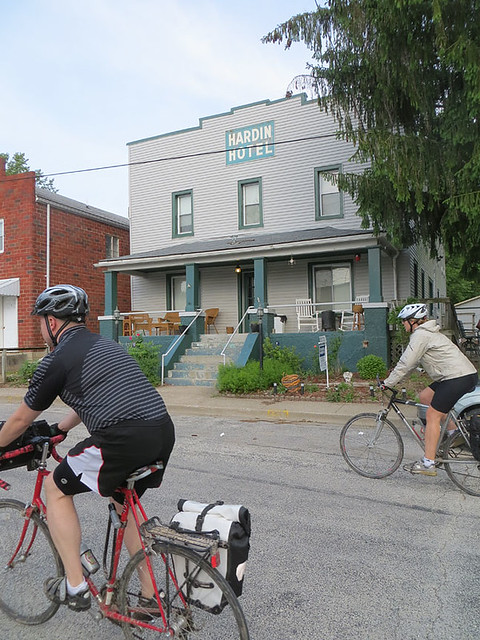
Leaving the quaint Hardin Hotel in Hardin, Illinois.
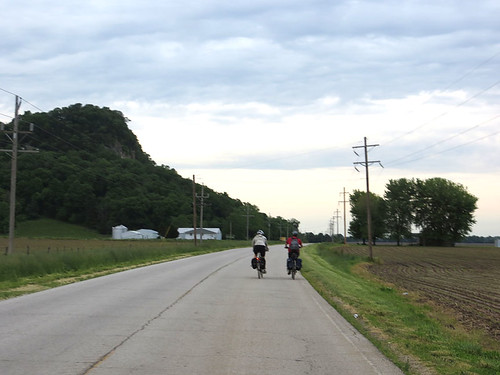
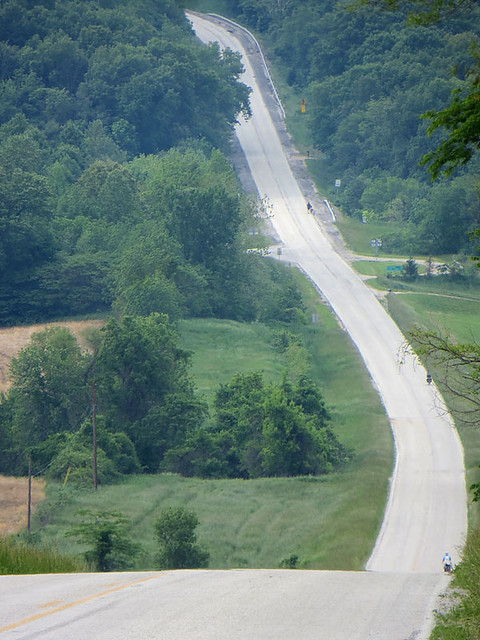
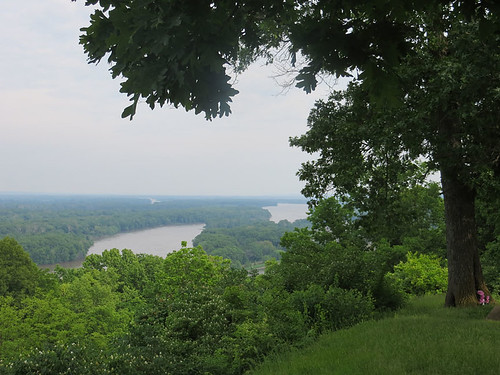
A photo at the top of the ridge dividing the Illinois and Mississippi River valleys.
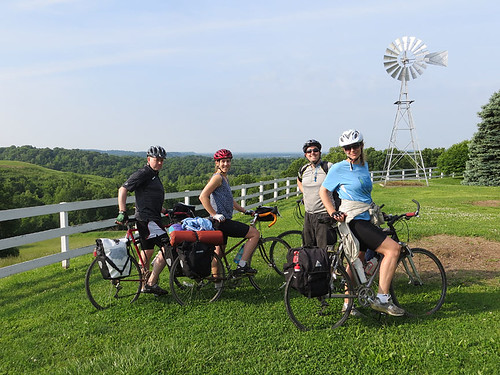
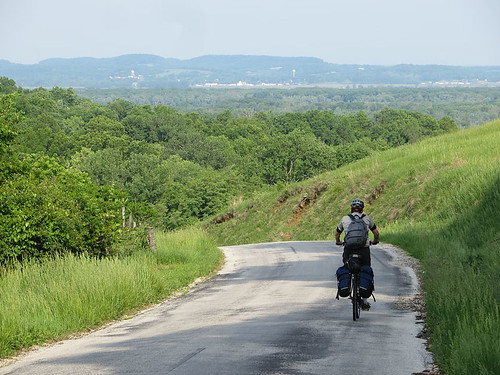
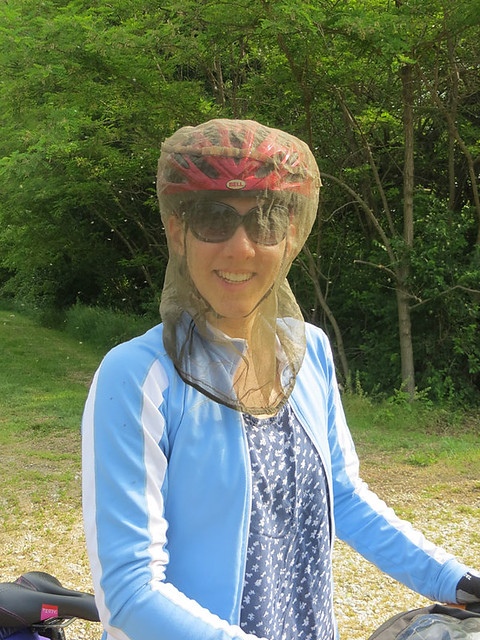
Don't stop, or thousands of buffalo gnats will swarm you.
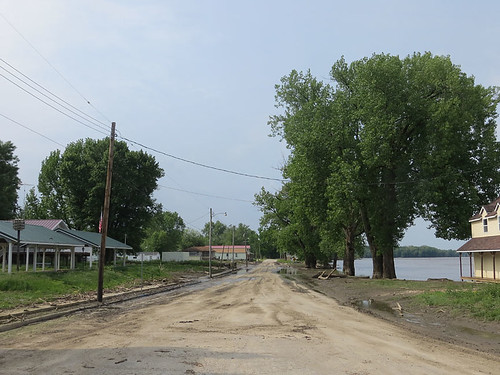
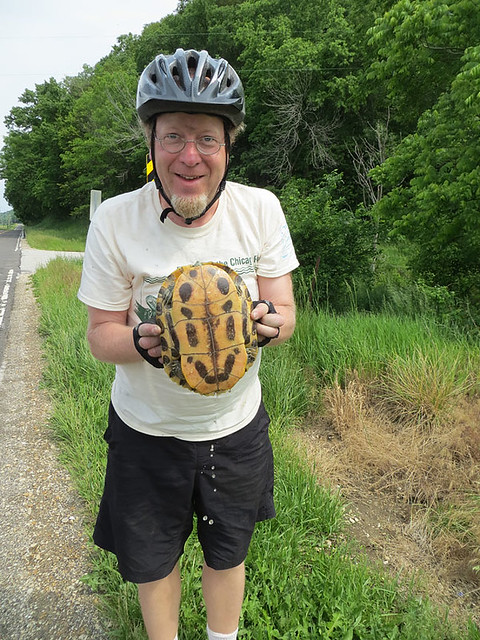
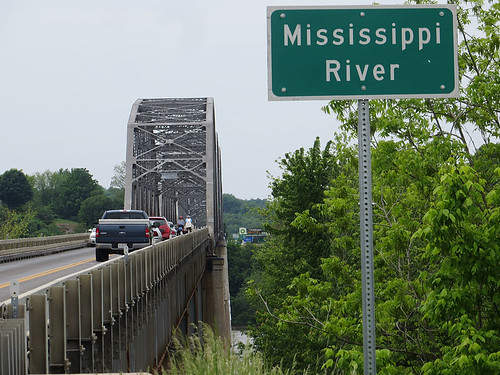
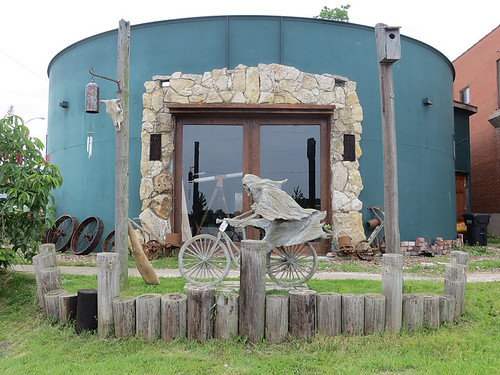
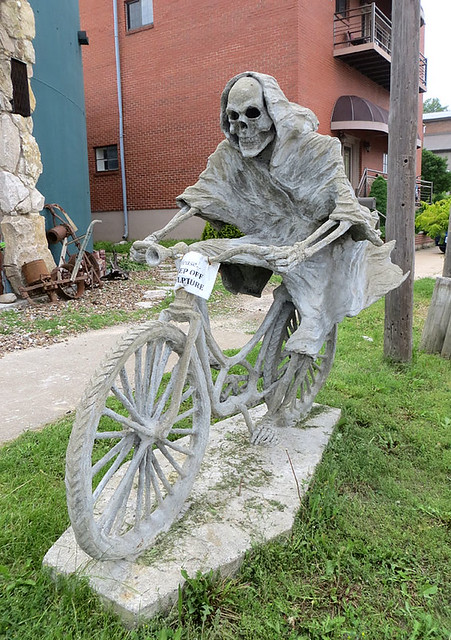

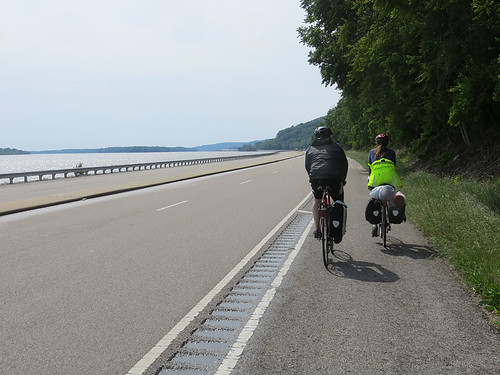
For Memorial Day we are taking a bike trip along the Mississippi River from St. Louis to Quincy, Illinois. But first, to connect the line on the map from last year's bike tour to Bloomington, Indiana, we are taking the train south to Mattoon.
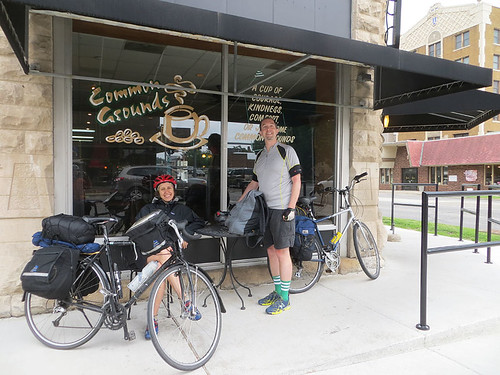
Andrew had started biking south several days earlier and met us at the same coffee shop where we started last year.
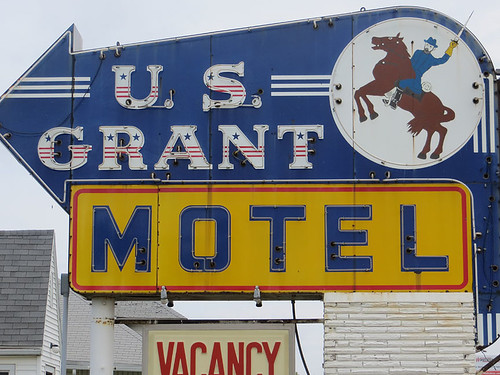
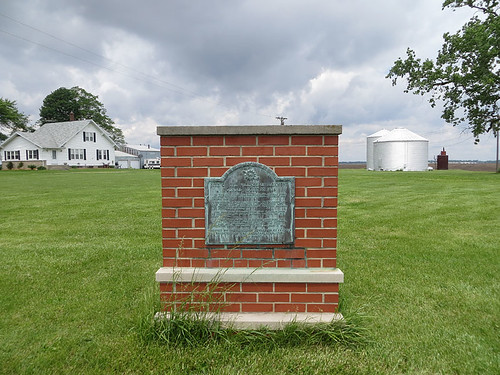
Leaving Mattoon we follow a bit of the old National Road, passing the site of a ghost town from lost America. Nothing is left from the town of Richmond but the grass in a farmhouse lawn.
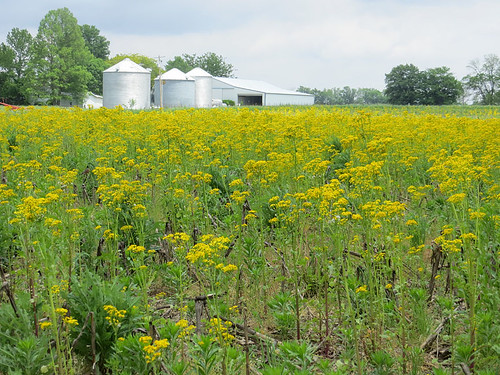
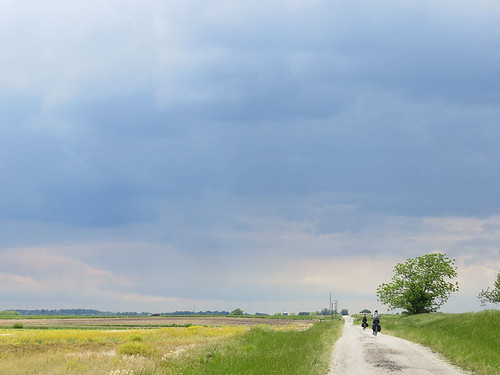
The Illinois bike map shows many small farm-to-market back roads, but its not easy to tell which ones are paved the whole way or turn to gravel halfway to the next town. On the first day of a bike tour, every mile seems to take forever. Or maybe they really were taking forever, because it took longer than expected to zig and zag our way to Shelbyville.
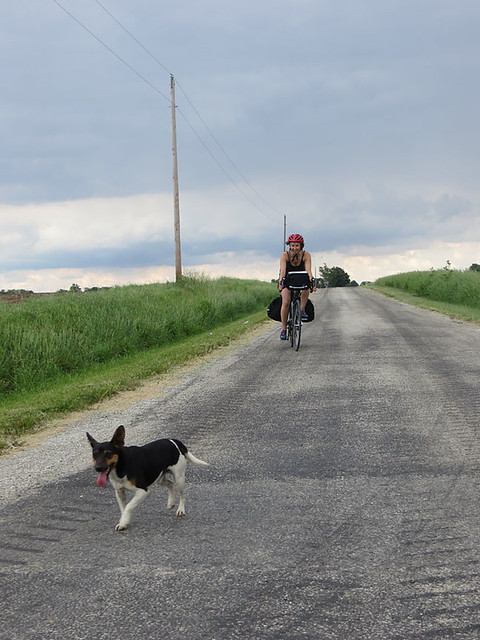
Lots of farm dogs came out to bark at us. This one was friendly, and ran alongside me for several miles. We passed several busy roads and still he did not tire or turn back. I clocked him at 18 miles an hour on a long straightaway.
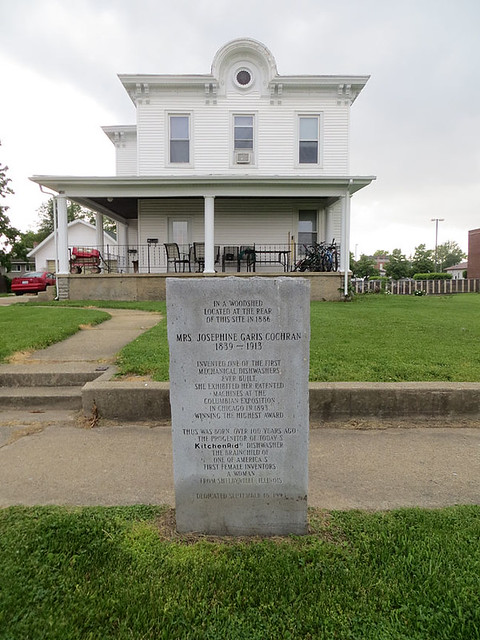
In Shelbyville we stopped to pay homage to an historical marker. Here in 1886, Josephine Cochrane built the first mechanical dishwasher. Dirty dishes were held in wire baskets placed in a container inside a copper boiler which turned and squirted soapy water over them. The company she founded later became part of KitchenAid.
Leaving Shelbyville, we over-inflated Andrew's rear tire, which ruined the tire. By this time it was so late in the day that no bike shops were open. We were forced to make a shameful trip to the Walmart at the edge of town to buy a new tire, and the repairs left us farther behind as the sun sank lower. Not knowing if we'd make it to our planned campsite, we headed back out on the road.

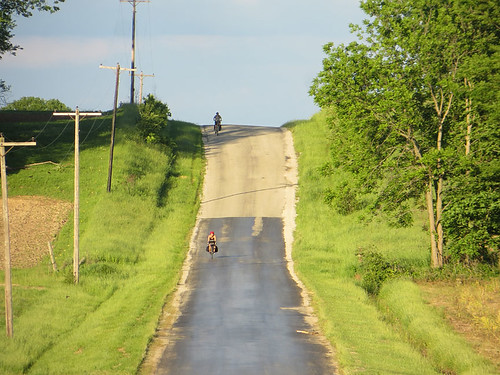
Continuing southwest around the town of Herrick, the landscape became hillier and the downhills never seemed to make up for the slow progress uphill. The sun sank lower and we knew that it was unlikely we'd make it to the reserved campsite at Ramsey State Park but still we rode on without much of a plan.
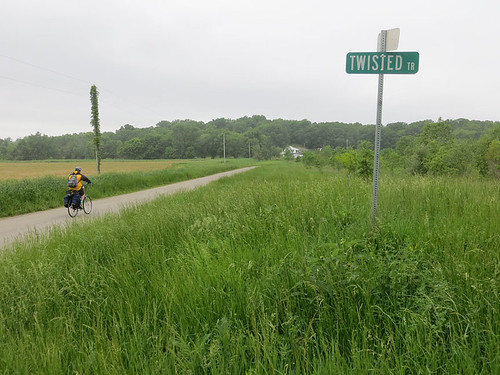
Now in the dusk, we turned on our bike lights and continued on, but the road grew worse, with patches of gravel on the downhill slopes that were especially treacherous in the dark. At the crest of a steep and twisting grade going down into darkness, we spotted a farmhouse with a light on.
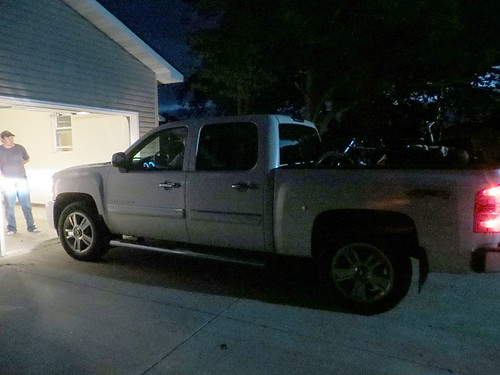
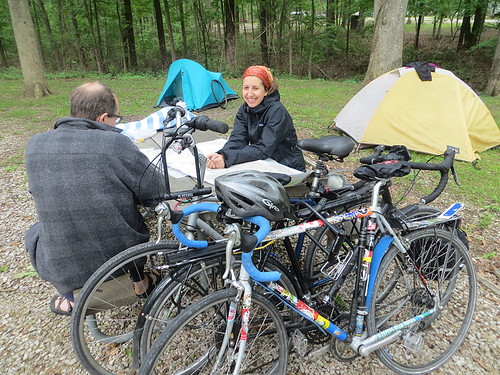
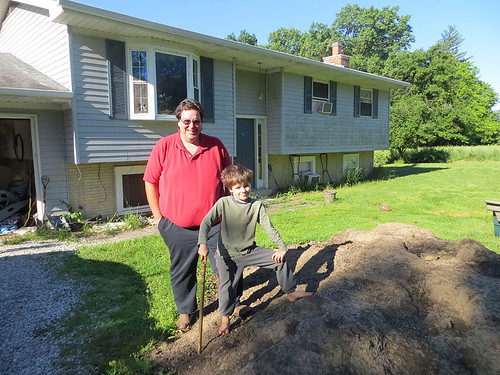
Our plan was to ask to camp in the yard, but the kindly couple offered to load us all into their pickup and drive us the last few miles to the campground. It wasn't too far, but riding in comfort of the big truck, it was obvious that it would have taken us hours up and down those steep gravel roads in the dark. On our flat maps we hadn't realized how difficult it was to bike this pocket of hilly terrain in the middle of Illinois.